


Impctrs Management GroupSign in
Five colleagues in a sunlit meeting room, gathered around printed campaign materials spread across the table.

Your year-end campaign should not depend on whether your team has time to build it.

We build the campaign. You run it. Fifty to a hundred and twenty-five pieces, written for your donors, delivered five to seven business days after your intake is complete.

Oct 1Giving Tuesday Dec 1Dec 31

90 days until the December 31 deadline.

Every nonprofit knows what a good year-end campaign looks like. Almost none of them have November free to build one.

The emails get written the night before. The appeal letter goes out late because nobody had time to proof it. Giving Tuesday arrives and the graphics are not ready. The board asks how they can help and there is nothing to hand them.

None of that is a competence problem. It is a capacity problem, and it happens in the eight weeks of the year when your revenue is decided.

A fundraising strategist working through campaign materials at her desk.

We build it for you

You fill in one intake. Your programs, your donors, your numbers, your stories, the things you will not say and the people who sign things off. It takes most organizations about an hour, and it replaces the discovery calls.

Then our team writes your campaign. Not templates with your logo dropped in. Your mission, your donors, your December.

What you receive

A complete year-end campaign, written and ready to send. Strategy, content, creative and the plan that runs them, not a list of ideas.

50 to 125 pieces. One coordinated campaign.

Across every part of a year-end campaign. Not a hundred and twenty-five social posts. Complete covers all fourteen. Essentials covers the written campaign across email, social, graphics and your giving page. What it costs sets out both.

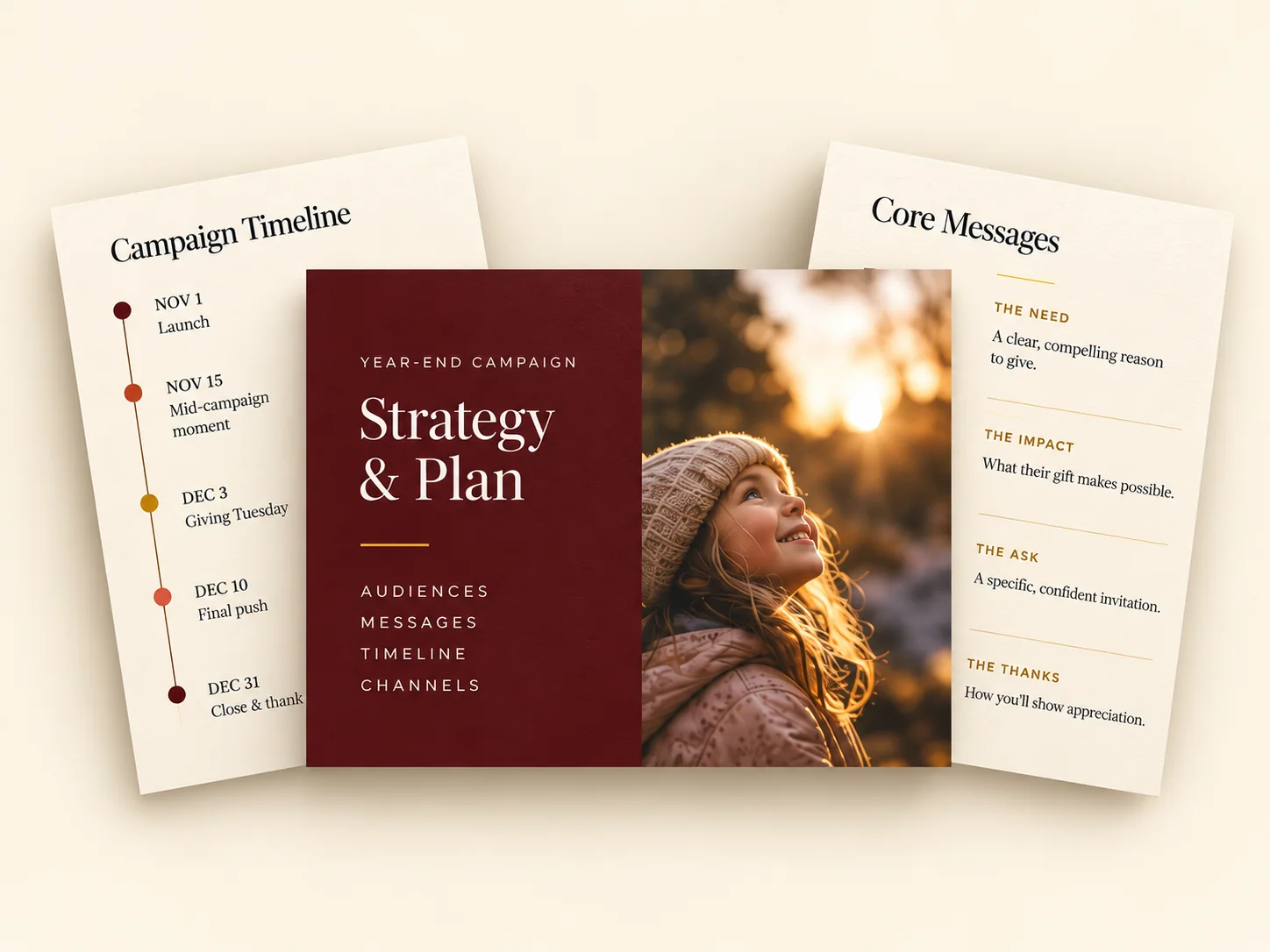
The strategy document for a year-end campaign, shown with a campaign timeline running from November 1 to December 31 and a core messages sheet covering the need, the impact, the ask and the thanks.

The strategy document. Written first, and the thing every other piece is built from.

Settled first, because everything else is written from it.

Strategy
The goals, audiences, messages and priorities your campaign is built on. Read this first, and share it with anyone who will be writing or approving anything.
50 to 125 pieces
Across email, social, graphics, video, direct mail and more. How many depends on the tier you choose.
5 to 7 business days
Your whole campaign, delivered that many business days after your intake is complete.
Command Center included
Every piece, dated and organized in one place, so your team knows what to use and when.

One campaign. An entire fundraising ecosystem.

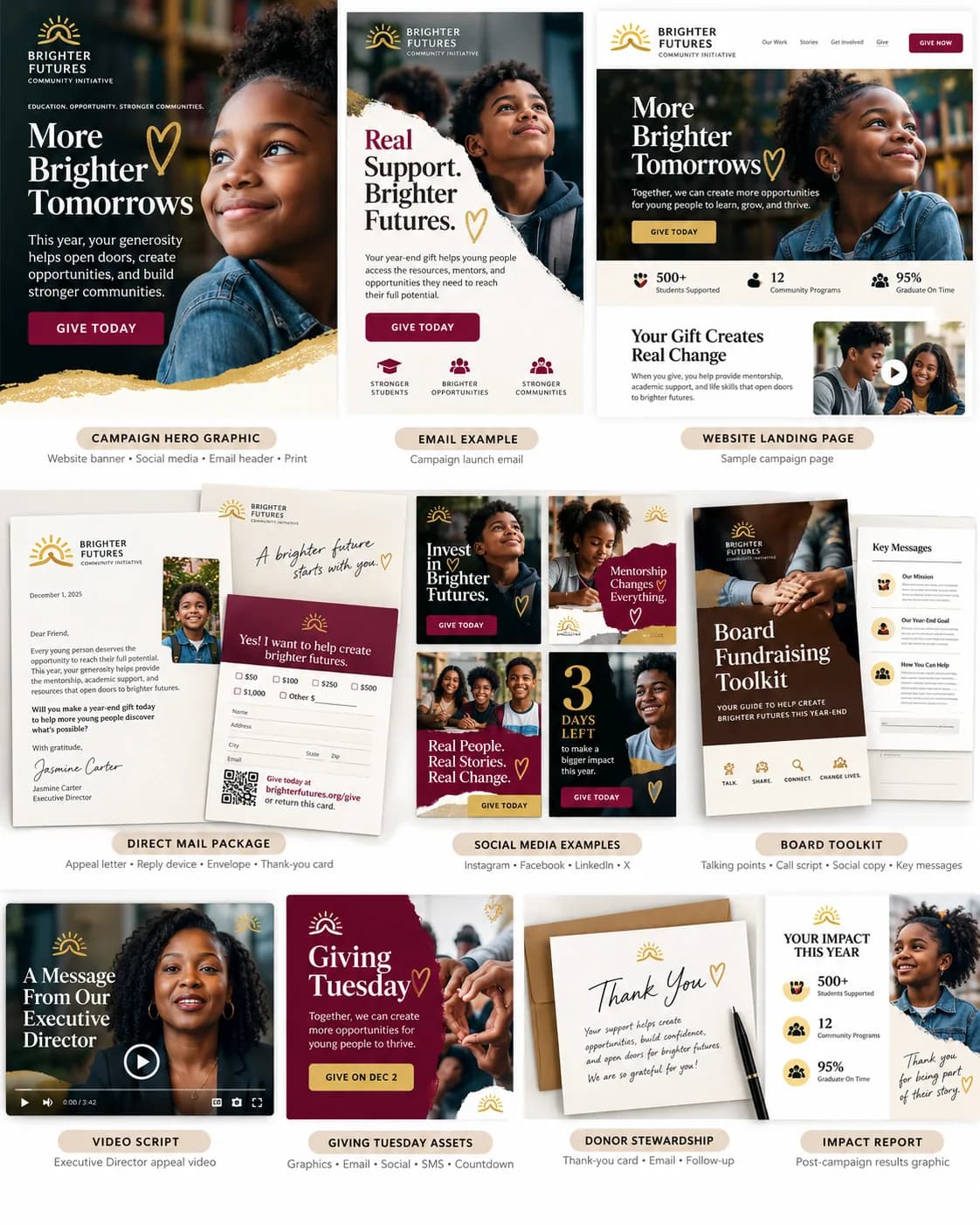
This is what we mean by complete. Your campaign is built as one coordinated system across email, web, direct mail, social, Giving Tuesday, board outreach, video, donor stewardship and reporting.

Every piece works from the same strategy, the same message, the same visual direction, the same audiences and the same goal. That is the part a team building it in spare evenings cannot do, and it is the part donors notice.

Sample campaign shown for demonstration. Every client campaign is built around that organization’s own brand, mission, audiences, stories and fundraising priorities.

A collage of one nonprofit's finished campaign: emails, social graphics, a printed appeal letter, board materials and donor thank-you cards.

Five to seven business days

The clock starts the day your intake is complete, not the day you sign. These five stages are numbered because they genuinely are a sequence: each one is built on the one before it.


Built in sequence

5–7 business days


  1. 1

    Strategy

    We read everything you sent, settle the campaign theme, define who you are asking and in what order, and build the calendar the rest of the week fills in.

  2. 2

    The long pieces

    The case for support, the appeal letter, the major donor materials, your website copy and the core email sequence. The writing that everything shorter is cut from.

  3. 3

    The fast pieces

    Social, Giving Tuesday, texting, video scripts, the champion toolkit and the thank-you sequence that runs after a gift arrives.

  4. 4

    Creative and assembly

    Graphics sized for where they go, and every piece placed into your Command Center against its date, audience and channel.

  5. 5

    Checking and handover

    Names, dates, links, figures, permissions, claims. Then your portal opens and your team can start.

Then it goes somewhere your team can actually work

Not a folder of documents. The Campaign Command Center holds every piece against its date, its audience and its channel, and answers the only question that matters in December: what do we do today?

Your team copies the words straight into your own email and texting tools. Nothing sends on your behalf, so your campaign goes out from you and your donors reply to you.

Copy text
takes the words into your own email tool
Mark scheduled
tells the rest of your team it is handled
Ask for a change
reaches us without starting an email thread

We did not simply create a hundred and twenty-five assets and hand you a folder. We organized your campaign so your team knows what to use, when to use it, who should receive it, and what happens next.

That is the difference between a content package and a campaign operating system.

Beside this is the real thing, with sample content.

Email

Campaign launch email

Open the campaign by naming the goal and the deadline, and give every donor one clear thing to do.

Full donor listUse it Sat, Oct 3Launch

Ready to use

Piece 12 of this campaign

Why this exists. Open the campaign by naming the goal and the deadline, and give every donor one clear thing to do.

What you are asking for. Give before December 31 so the Tuesday meals program runs through winter.

Subject line

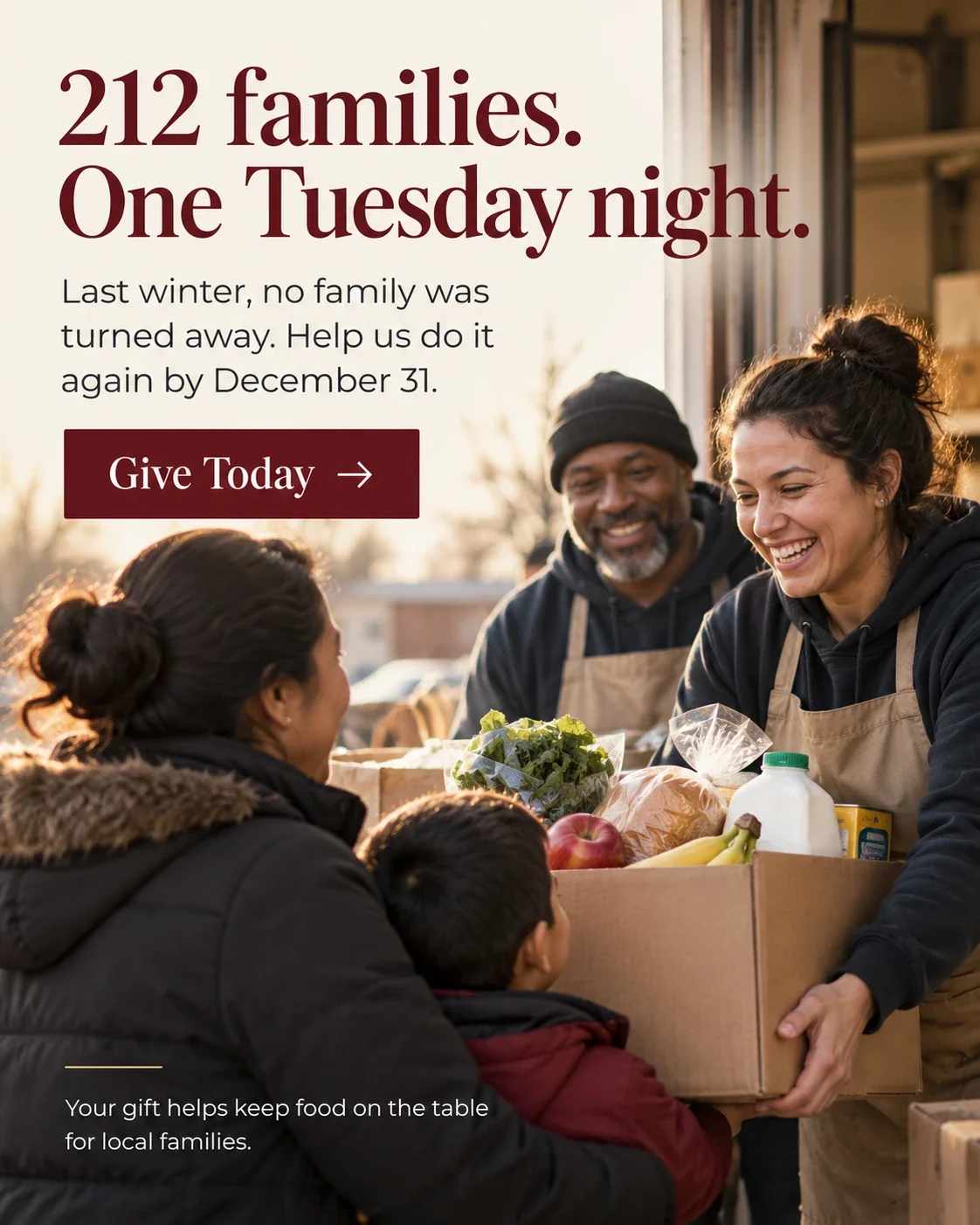
212 families. One Tuesday night.

Or: We have until December 31

Preview text

Here is what your gift did last winter, and what it can do now.

The copy

Dear {{first_name}},

Last winter, 212 families came through our doors on a Tuesday night and left with a week of groceries. Not one of them was turned away.

This year we need to do it again, and we have until December 31 to raise $150,000 to make it possible.

Your gift of $50 feeds a family for a week. Your gift of $200 feeds one for the month.

Will you give today?

With gratitude,
Dana Reed
Executive Director

Hashtags

#YearEndGiving #FeedOurNeighbors

Image description for anyone using a screen reader: Campaign graphic reading 212 families, one Tuesday night, over a photograph of volunteers handing a box of groceries to a family.


One of more than a hundred and twenty-five, as your team sees it.

The gift is not the end of the relationship

Thank-you emails, board call scripts, handwritten card copy, first-time donor welcomes and the January materials that decide whether a December donor gives again next year.

Most campaigns stop on December 31. Retention is where year-end giving is either worth it or wasted, so it is built in rather than sold separately.

Two people at a table writing handwritten thank-you notes to donors.
A mentor and a young person talking together in a community program.

Why any of this matters

A campaign is not the point. The point is the family that gets through winter, the student who finishes the year, the program that does not close in February.

Year-end is where a great deal of that money is decided. An organization that runs December well spends the rest of the year doing its work instead of worrying about payroll.

What it costs

Three ways to buy the same campaign, differing by how much of it we build and how much help you want running it.

Essentials

A small team with a list and a deadline, who need the campaign written and nothing else.

$2,500

One campaign, paid once.

At least 50 pieces, across email, social, graphics and your giving page.

  • Campaign strategy and theme
  • Donor audiences and the message for each
  • The full email sequence, warm-up through final push
  • Social media, written and scheduled by phase
  • Campaign graphics
  • Website and donation page copy
  • Thank-you and January retention materials
  • The Campaign Command Center
Talk about Essentials (opens in a new tab)

Most organizations

Complete

An organization running a real year-end push across every channel, with a board and major donors to work.

$4,500

One campaign, paid once.

At least 100 pieces, across all fourteen parts of the campaign.

Adds the channels most organizations leave on the table.

  • Everything in Essentials
  • Direct mail: appeal letter, reply card, envelope and inserts
  • Giving Tuesday, built as its own day
  • Board toolkit, call sheets and talking points
  • Champion toolkit for supporters who will ask
  • Major donor letters, meeting scripts and proposals
  • Video scripts and filming notes
  • Text messages
Talk about Complete (opens in a new tab)

Complete with support

A team that will have the materials and still needs someone alongside them in December.

$7,500

One campaign, paid once.

At least 125 pieces, and someone alongside you through December 31.

Adds a person to call when December gets loud.

  • Everything in Complete
  • A working session before launch
  • Weekly check-ins through the campaign
  • Priority revisions while the campaign is live
  • Results entered and the board report written for you
Talk about Complete with support (opens in a new tab)

Every tier includes the Campaign Command Center and delivery five to seven business days after your intake is complete. The revision window and what it covers are agreed before we start.

Your December is already decided. The only question is who builds for it.

Tell us about your organization and we will tell you honestly whether a built campaign is what you need this year.


Five to seven business days from a completed intake. Nothing is charged until we have spoken.